Digital marketing
Building a Member Tagging System from Scratch: Monetize Data with AIM and a CDP
- CDP
- LINE
- Digital transformation
Contents
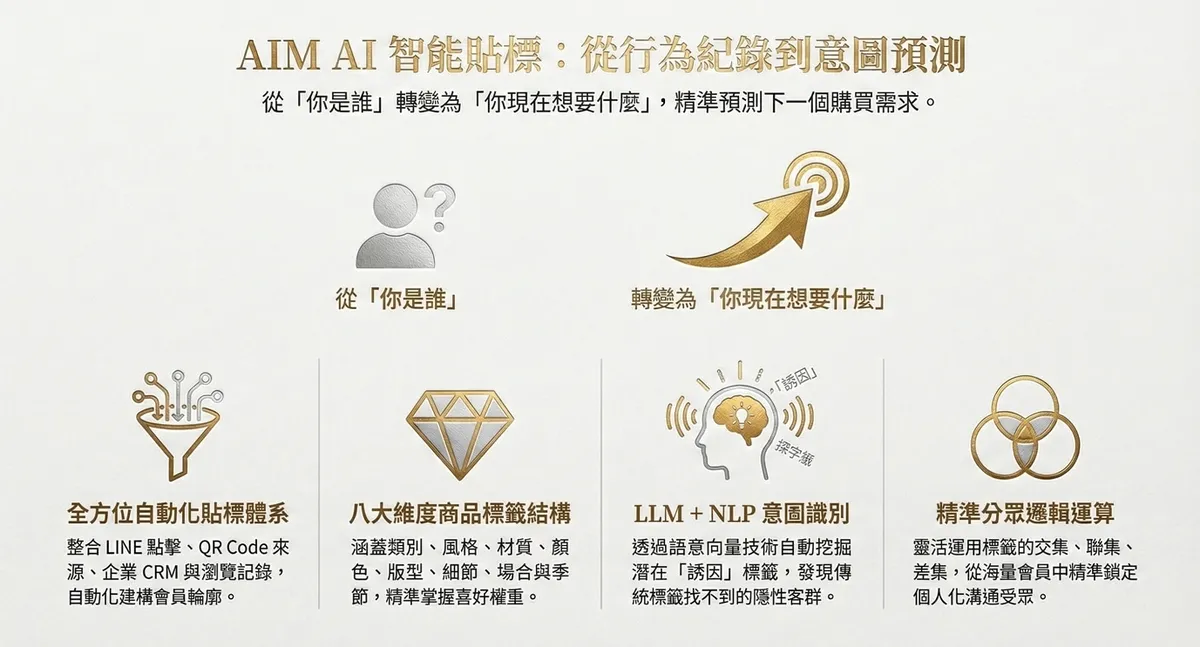
When companies implement a new system, they often find themselves “sitting on huge amounts of data but unable to monetize it.” The system itself is just a container. What really drives marketing automation and precise decisions is whether you have built a rigorous, logical “member tagging system.”
A tagging system turns raw, cold data into something with recognizable business value. Built in a structured way, it lets companies turn vague traffic into concrete assets and close the loop from business needs to technical delivery.
Business needs drive tag definitions
A tagging system doesn’t start with organizing data; it starts with clarifying business goals. Without real use cases behind them, the tags you produce become meaningless metrics.
In the planning phase, break your strategic goals down into core metrics. For example, if the goal is “precise marketing reach,” the tags you need include “incentive preference,” “interest preference” and “identity.” If the goal is “churn warning and win-back,” you will rely on metrics such as “RFM/NES tags” and “churn alerts.”
Business teams should help set the priority of use cases, because different departments need very different tags:
- Marketing team: needs a “promotion-sensitive user” tag, calculated by combining “click history” and “coupon redemption rate.”
- Product team: needs user behavior tags to improve features, for example analyzing the browsing paths of “cart abandoners.”
Mapping data sources and setting governance standards
A tagging system is only as good as the data beneath it. Data collection must cover both static attributes and dynamic behavior and go through a standardized cleansing process.
There are four main types of data:
- Static attribute data: from registration forms or surveys, including gender, age and basic profile details.
- Channel source data: identifies where users came from, through push messages or dedicated QR codes.
- Dynamic behavioral data: imported from sources such as the company’s internal CRM.
- Transaction data: exported from ERP or CRM systems, including average order value, promotion sensitivity and return rate.
Before raw data enters the system, strict data governance is essential. Cleansing includes removing outliers (such as ages over 150), filling in missing values and standardizing field formats (for example, putting all “phone numbers” into one standard format).
Structuring the tag taxonomy
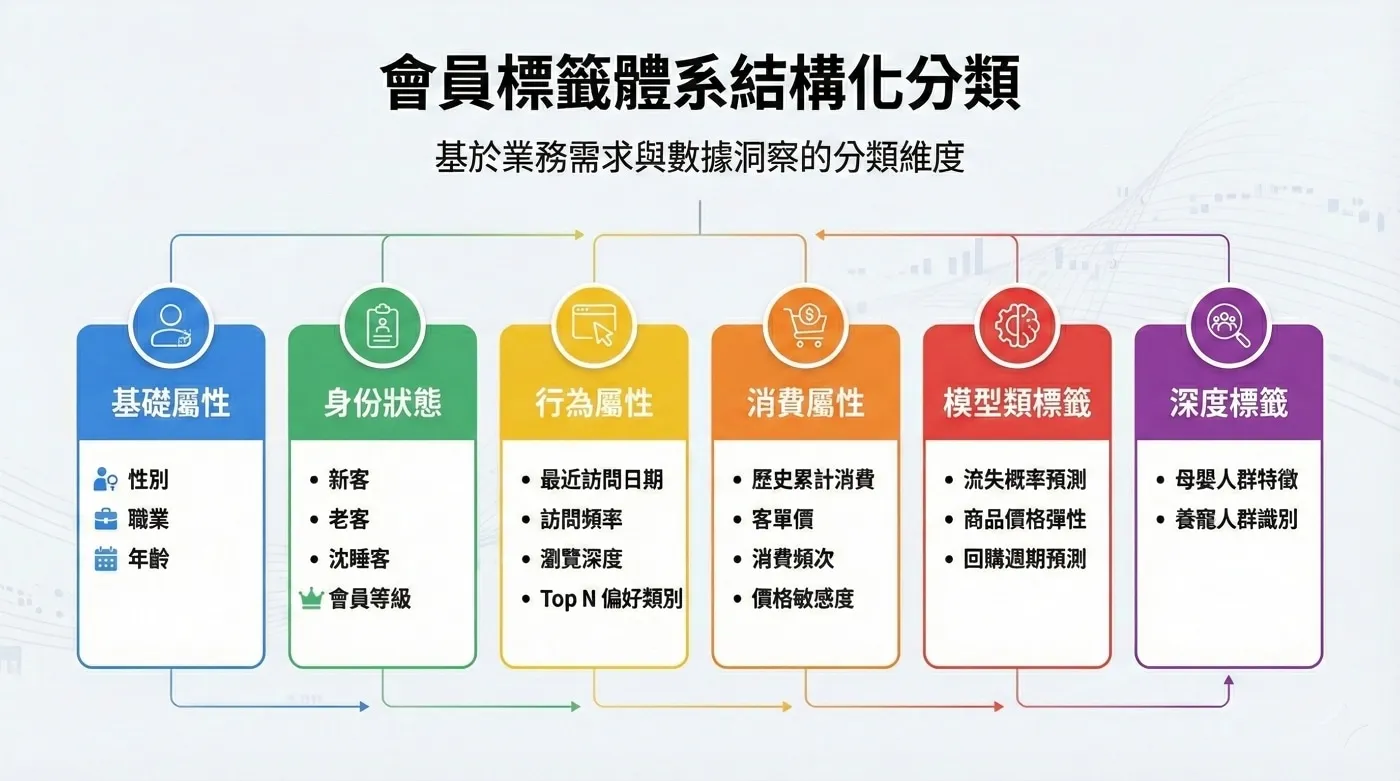
A complete tagging system usually spans several dimensions, such as basic attributes, behavioral preferences and spending power. Depending on how often they update and how they are calculated, these tags have different lifecycles.
- Basic attributes: such as gender, occupation and age. These tags change rarely and are used mainly for basic profiles and product preference analysis.
- Customer status: distinguishes new, existing and dormant customers. For example, a “new customer” is defined as someone within a set number of days (such as 30) after their first order, while a “dormant customer” is a user who has been inactive for more than a set number of days.
- Behavioral attributes: cover last visit date, visit frequency and browsing depth. The system calculates the top N preferred categories, weighting them by both number of views and browsing depth.
- Spending attributes: core metrics include cumulative spend, average order value and purchase frequency. For “price sensitivity,” the system calculates a composite score based on promotion clicks and classifies users as highly sensitive (discount-driven) or less sensitive (value-driven).
More advanced designs also include “model-based tags,” such as churn probability and repurchase cycle predictions, and “deep tags” that identify specific characteristics, for example of parents with young children or pet owners.
AI tags and predictive models in AIM/CDP
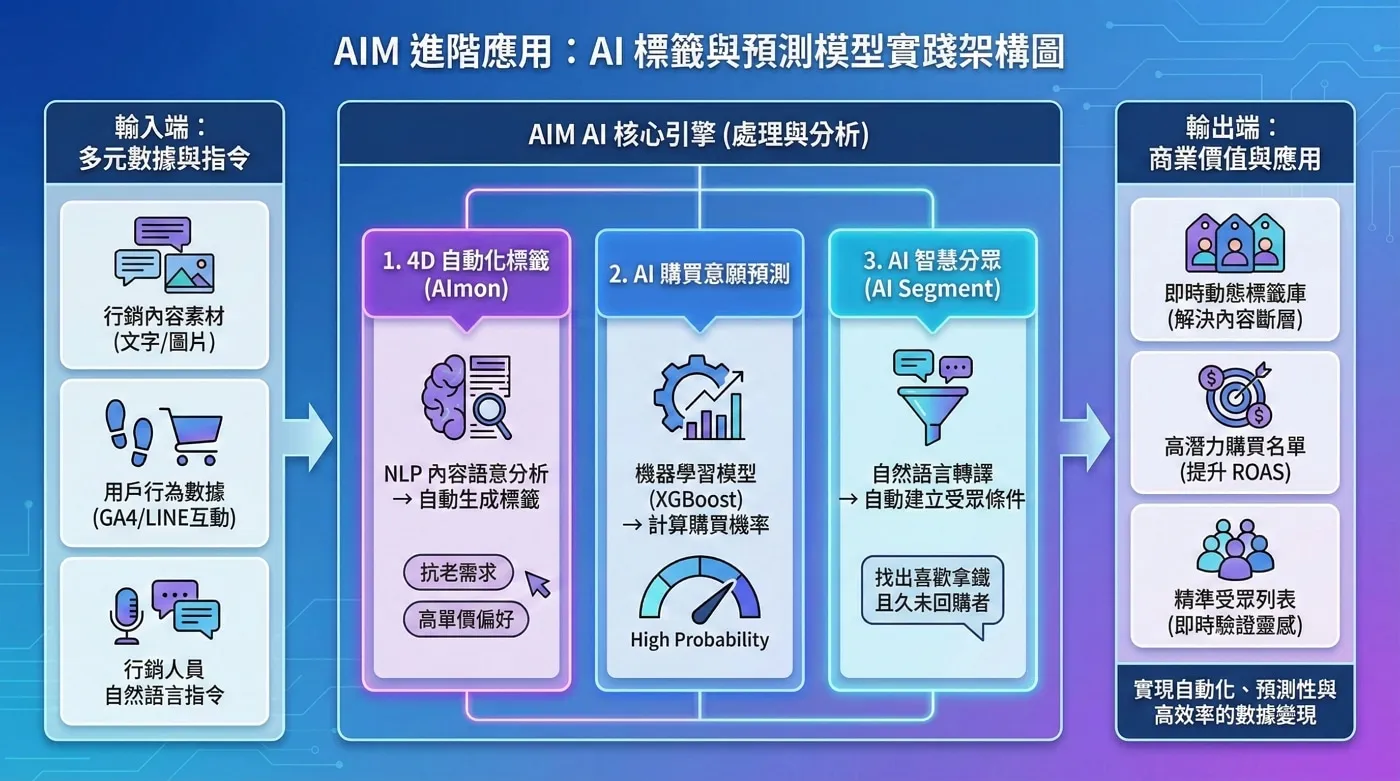
Once the foundation of the tagging system is in place, companies often hit two bottlenecks: first, “manual tagging” costs too much staff time, so tags fall out of date; second, “rule-based tags” only reflect the past and can’t predict the future. This is where AIM’s AI modules come in, upgrading a static tag library into a dynamic prediction engine.
1.Automated tagging: closing the gap between “content” and “data”
Traditional behavioral tags depend on staff setting rules by hand in the back office (for example, clicking link A = apply tag B). AIM’s tagging technology uses natural language processing (NLP) to analyze the marketing content you send (text, images, links) automatically and generate the right tags when users interact.
- Use case: When a marketer sends a message about an “anti-aging serum,” the AI recognizes what the content is about and tags everyone who clicks with “anti-aging needs” and “prefers premium products,” with no rules defined in advance. This fully automates the “tag production engine” shown in the architecture diagram above.
- AIpurchase intent prediction: putting model-based tags to work
Building the “model-based tags (such as XGBoost)” mentioned above in-house is technically demanding. AIM’s built-in Predicted Purchase Probability feature turns this concept directly into a product.
- How it works: The system combines GA4 browsing data (add-to-cart events, browsing depth) with LINE engagement data to calculate each member’s probability of buying in the next two weeks.
- How the tag is used: The system automatically flags “high-potential buyers (top N%).” When budgets are limited, marketing resources should be concentrated on these “high-probability” users rather than cast indiscriminately at everyone. In real-world tests, this has significantly improved ROAS (return on ad spend).
- AIsmart segmentation: “conversation” instead ofSQL
In a traditional setup, filtering on complex tags (for example, coffee lovers who haven’t bought anything in 30 days) usually requires a data analyst to write SQL or work through a complicated back-office interface. AIM’s AIsmart segmentation (AI Segment) lets marketers describe what they need in “natural language.”
- Example: Type “Find members who like lattes but haven’t repurchased in over two months,” and the AI interprets the request, combines the “product preference” and “last purchase date” tags, and instantly generates a precise audience list. This greatly lowers the technical barrier to monetizing data and lets business teams test marketing ideas right away.
Validation and continuous improvement
Once the tagging system is in place, it must be validated in real business scenarios. Use A/B tests to compare tag strategies, for example sending discount coupons to “price-sensitive users” and checking whether conversion improves. Data shows that precise tagging strategies can significantly improve conversion efficiency.
The system also needs a retirement process. Regularly review each tag’s coverage and business ROI, and merge or delete tags that have long been ineffective or don’t distinguish users well. As the business changes, the tagging system should keep evolving so that data continues to provide an accurate basis for business decisions.
AIM from ESi Technology is an all-in-one LINE marketing platform. It offers solutions for running an engaging LINE account, shows you who your LINE friends are, and adds in-depth data analysis, so you can gain friends more efficiently, avoid blocks, and turn friends into paying customers.
By providing comprehensive, real-time, personalized data, a CDP helps businesses adapt to the digital environment, improve efficiency, customer experience and competitiveness, and drive digital transformation.
Want to learn more about customer data platforms (CDP) and how to get started? Visit our site for more: Customer data platform (CDP)
Open up new channels for growth
See your members in full and build momentum for revenue growth.
Further reading:
- The 80/20 rule of membership: how to keep your most valuable customers
- What is a customer data platform (CDP), and how does it help businesses and marketers?
- How to market with a LINE Official Account: 8 principles for member engagement and conversion on LINE
Share this article
- Share “Building a Member Tagging System from Scratch: Monetize Data with AIM and a CDP” on Facebook (opens in a new window)
- Share “Building a Member Tagging System from Scratch: Monetize Data with AIM and a CDP” on LINE (opens in a new window)
- Share “Building a Member Tagging System from Scratch: Monetize Data with AIM and a CDP” on LinkedIn (opens in a new window)