Digital marketing
What Is a CDP? From Data Integration to Precision Marketing and 360° Profiles
- CDP
- Digital transformation
- News

Contents
Your customers may come from your website, your app, your physical stores, Facebook ads or your LINE Official Account. They leave behind a huge amount of data, but that data is scattered across separate systems like missing puzzle pieces. This is marketers’ biggest pain point: “data silos”.
You know what customer A browsed on your website, but not whether they then bought in store. You know customer B clicked an ad, but you can’t match them to the member record in your CRM. The result: disorganized campaigns, wasted budget, and customers annoyed by irrelevant messages.
The CDP (customer data platform) was created to solve exactly this problem.
Put simply, a CDP is a company’s “marketing data hub” or “customer data brain”. Its core task is just one thing: to unify customer data from every channel and, through identity resolution, assemble a real, unified 360° customer profile.
This article explains the core value of a CDP, how it differs from a CRM, and how it can transform your marketing strategy.
Why do businesses need a CDP?
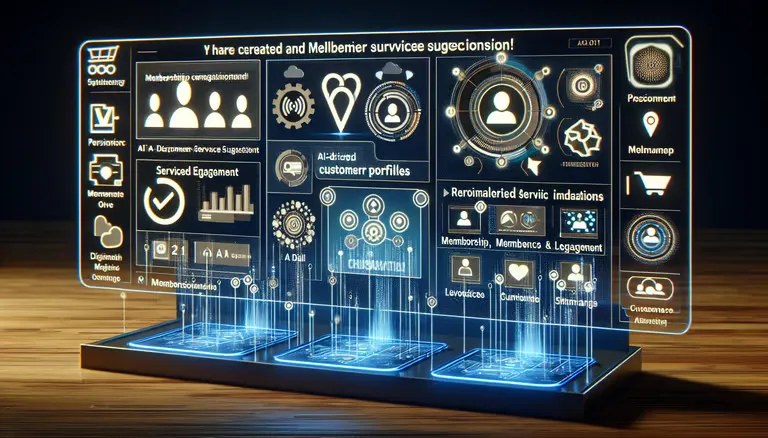
1. Data collection: break down every barrier
A CDP connects all your online and offline data sources:
- Online behavior: website browsing, app clicks, ad interactions, social media.
- Offline data: POS systems, store visits, customer service records.
- Back-end systems: CRM, ERP, MA tools, membership systems.
2. Data integration: assemble a single customer view
This is the most remarkable and most important step of a CDP. Using powerful identity resolution technology, a CDP attributes data from different channels to the same person.
- For example:
- Someone who signed up on your website with
user@email.com. - Someone who logged in to your app with the mobile number
0912-345-678. - Someone who gave the member number
V12345in store.
- Someone who signed up on your website with
A CDP can recognize that these three seemingly unrelated records are actually “the same customer”. It merges them into a unified 360° customer profile that captures this customer’s full footprint and tags.
3. Data activation: put your data to work
Once you have a clear customer profile, you can achieve the precision marketing that wasn’t possible before:
- Precise segmentation: Not just “women aged 30–40”, but “VIP customers living in Taipei who viewed product A in the past 30 days with an average order value above NT$5,000”.
- Marketing automation: Automatically send these segments to ad platforms (Google, Meta), email/SMS systems or LINE to trigger customized messages.
- Data analysis: Gain a deep understanding of your customer journey and customer lifetime value (CLV).
A common misconception: what’s the difference between a CDP and a CRM?

This is the question that confuses people most. A CDP and a CRM (customer relationship management) don’t replace each other; they work together as partners.
In short:
- CRM (customer relationship management): Mainly used to “manage” interactions with “known customers”. It leans toward execution and is a key tool for sales and customer service teams. (For example: logging sales visits, managing support cases, sending member newsletters.)
- CDP (customer data platform): Focuses on “unifying” data from “all sources” (including anonymous visitors) to build a “unified customer profile”. It is the strategic data foundation.
Further reading: Want to dig deeper into the differences? >>CDP vs CRM in depth: which one do I need?
A CDP is the “database” and the “brain”: it cleans all the raw material (data) and builds the files. A CRM is the “hands and feet”, the execution tool that takes the files the CDP has prepared and uses them to interact with customers.
The endless possibilities of a CDP: real-world scenarios
The theory sounds great, but what can a CDP actually do in practice? A good CDP makes marketing “real-time” and “thoughtful”.
- Scenario 1: Recovering abandoned carts in e-commerce A customer adds items to the cart in your app and then leaves. A CDP captures this behavior in real time and automatically triggers an email or LINE message reminding them, “Did you forget something?”, along with an exclusive coupon.
- Scenario 2: Online-offline (OMO) integration in retail A member viewed sneaker model A on your website but didn’t buy. A few days later, when they walk into a physical store, the AIM/CDP system immediately shows the store staff a prompt: “This member is interested in sneaker model A.” Staff can then recommend it proactively, greatly increasing the close rate.
See more case studies: Learn how different industries use a CDP to grow sales >>CDP use cases: how e-commerce, retail and finance put data to work
Choose your data brain: start from member loyalty

A CDP isn’t a tool you simply buy and forget. It is a strategic core that needs long-term management. There are many CDP vendors on the market, but what you need is not just a data repository; you need a partner that truly drives revenue.
Many CDPs emphasize data integration, but the CDP solution from ESi Technology (ESi-TECH) goes a step further, tightly linking customer data with member loyalty programs.
ESi understands that the ultimate purpose of data is to build loyal fans. That’s why the ESi-TECH CDP platform comes with the ready-to-use features marketers need most:
- Powerful data integration: Connects cross-platform data from your website, app, POS, CRM and more for a true 360° customer view.
- Automated RFM models and tagging: Without waiting for engineers, marketers can define “high-value customers” and “dormant customers” themselves and tag them automatically.
- Deeply integrated loyalty programs: Links points, tiers and member benefits to customer behavior, so data is used not only for ad targeting but also to deepen member management.
- Marketing automation (MA) flows: Automatically triggers customized email, SMS and LINE messages for each customer segment, delivering a precise customer journey.
A CDP is no longer an expensive, out-of-reach technology. It is an essential investment for businesses to stay on their feet amid the data wave. Choosing a CDP partner like ESi, one that starts from member management, will help you turn your data into real revenue faster.
Learn more >> ESi-TECH’s CDP member loyalty solution
ESi AIM is an all-in-one LINE marketing platform. It offers lively solutions for running LINE and a clear picture of your friends, backed by in-depth data analysis, so you can grow friends more efficiently, avoid blocks and convert friends into real customers.
By providing comprehensive, real-time and personalized data, a CDP helps businesses adapt to the digital environment, improve operational efficiency, customer experience and competitiveness, and drive digital transformation.
Want more information about customer data platforms (CDPs) and how to get started? Visit our website now to learn more: CDP customer data platform
Open up new channels for growth
See your members in full and build momentum for revenue growth.
Further reading:
- The 80/20 rule of member management: how to keep your most valuable customers
- What is a customer data platform (CDP)? How does a CDP help businesses and marketers?
- LINE Official Account marketing: 8 ways to engage members and convert
Share this article
- Share “What Is a CDP? From Data Integration to Precision Marketing and 360° Profiles” on Facebook (opens in a new window)
- Share “What Is a CDP? From Data Integration to Precision Marketing and 360° Profiles” on LINE (opens in a new window)
- Share “What Is a CDP? From Data Integration to Precision Marketing and 360° Profiles” on LinkedIn (opens in a new window)